
Chronic Open Angle Glaucoma (COAG) is a leading cause of preventable vision loss worldwide. In the UK, management is guided by NICE (National Institute for Health and Care Excellence) recommendations, which emphasize a stepwise, patient-centered approach to control intraocular pressure (IOP) and preserve sight.
Let’s explore the current gold-standard management plan based on the latest NICE guidelines.
🔍 First-Line: Laser Over Drops
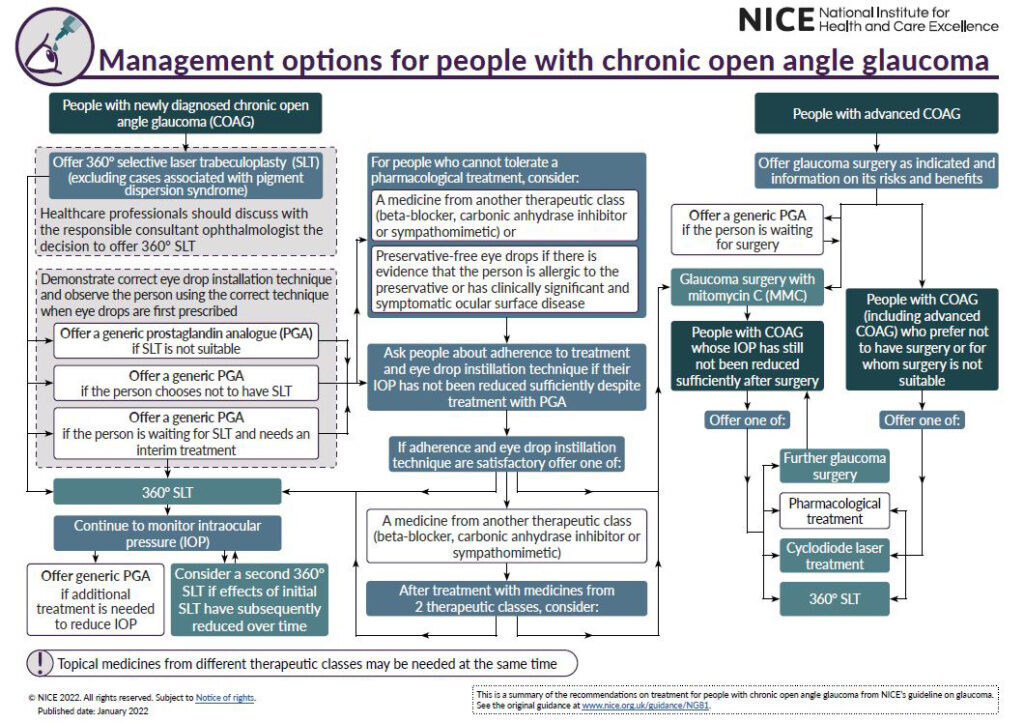
For patients newly diagnosed with COAG, 360° Selective Laser Trabeculoplasty (SLT) is now recommended as the initial treatment of choice. This shift from traditional first-line eye drops to laser aims to:
- Reduce long-term dependence on medications
- Improve adherence
- Minimize side effects from topical agents
📌 Important: Always consult with a glaucoma specialist before initiating SLT and ensure shared decision-making with the patient.
💧 If SLT Isn’t an Option
If the patient declines SLT or it is deemed unsuitable, the next step is to start a generic prostaglandin analogue (PGA) as the first-line medication. PGAs are widely accepted for their efficacy in reducing IOP.
If the response to PGA is inadequate or poorly tolerated, consider adding or switching to:
- Beta-blockers (e.g., timolol)
- Carbonic anhydrase inhibitors (e.g., dorzolamide)
- Sympathomimetics (e.g., brimonidine)
Combinations of drops from different therapeutic classes may be necessary for sufficient IOP control.
💡 Pro Tip: Don’t forget to assess compliance and drop instillation technique. Always demonstrate and observe how the patient uses the drops.
🔬 Role of Surgery in COAG
When both laser and medication fail to control IOP, surgical intervention becomes necessary.
- Repeat SLT can be considered if the initial procedure’s effect has worn off.
- Trabeculectomy with mitomycin C (MMC) is the recommended surgery for advanced COAG.
- If IOP remains uncontrolled, further surgery or cyclodiode laser may be considered.
For patients who decline surgery, SLT or medications remain viable alternatives depending on disease severity.
🔁 Ongoing Monitoring is Key
Management doesn’t end with treatment. Ongoing follow-up is critical to:
- Monitor IOP trends
- Assess for visual field progression
- Adjust or escalate therapy as needed
🩺 A multidisciplinary approach involving ophthalmologists, optometrists, and glaucoma nurses ensures optimal care delivery.
✅ Key Takeaways
- First-line: 360° SLT over topical medications
- Pharmacological back-up: PGA → add beta-blocker/CAI/sympathomimetic if needed
- Surgery: Indicated for advanced or uncontrolled cases
- Patient involvement and technique education are crucial throughout
- Lifelong monitoring is non-negotiable
🔗 Stay updated with evidence-based ophthalmology guidelines and exam-focused content on EyeCapsule.
🧿 For FRCOphth aspirants, knowing these NICE guideline updates is essential for both written and oral exams.